Why this category matters now
Traditional medical training was not designed for a world in which clinicians routinely supervise AI systems, help shape product requirements, review model outputs, or build tools with agents. The old binary of clinician versus engineer is no longer enough. There is now real value in people who can move between those worlds and preserve clinical reality while still building.
Our interest is not in turning every trainee into a software engineer. It is in creating a training pathway for clinicians who can see the problem, specify it well, work with technical collaborators, and ship something that is actually useful.
What Grover Lab means by clinician-developer training
The core skill is translation. A clinician-developer can stand inside a real workflow, identify where the waste or failure point actually is, decide whether the problem is educational, organizational, informational, or technical, and then help design the right intervention. That may be a simulator, an assessment layer, a retrieval system, a lightweight tool, or a full product.
That is why this area naturally connects to SharpenEDU. SharpenEDU is not just a product link; it is a practical example of the build orientation behind this work. The platform sits across curriculum intelligence, deliberate practice, and multimodal performance assessment. It is exactly the kind of infrastructure that requires clinicians who understand both the educational logic and the technical build process.
This is also the logic behind the forthcoming Clinical AI Developer Fellowship. The fellowship is still emerging, but the training problem it points to is already here.
How the idea is grounded in Samir Grover’s writing
Several essays in Samir Grover’s Substack series now form a coherent argument for this category. The AI agent-augmented physician argues that the major shift is from execution alone to the supervision of delegated work. Agentic AI in medical education and part 2 push that further into training design. Who trains the trainers? names faculty capability as a bottleneck. I became a good doctor by doing it badly first makes the counterpoint clear: not every rep should be automated away.
Taken together, those essays support a practical thesis. The future clinician is not defined only by personal execution. But neither is the future doctor simply a prompt writer. The training problem is how to produce clinicians who can still reason, still judge, still notice what is off, and also participate in building and supervising the systems now entering practice.
What this looks like in practice
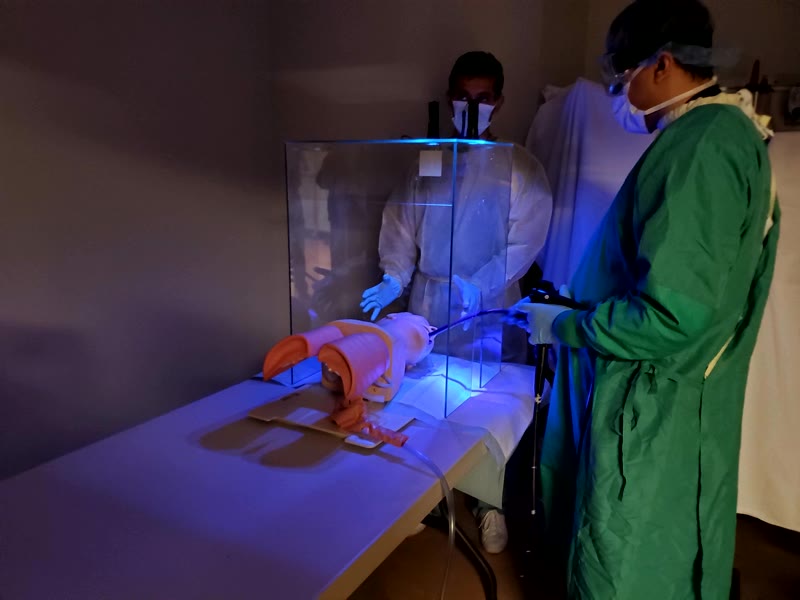
Inside a lab. Students and residents work on real educational and workflow problems, not only abstract coding exercises. Programs like Summer of Vibes and SHNackathon sit in that lineage.
Inside products. The work becomes concrete when a clinician helps shape a system such as SharpenEDU, where the questions are not theoretical. What sources should ground the model? What performance signals matter? What is a usable feedback layer? What is safe to automate and what still needs human review?
Inside training programs. The next step is structured development: explicit teaching in workflow analysis, specification writing, agent use, evaluation logic, human factors, safety boundaries, and interdisciplinary collaboration.
Selected references and linked work
Agentic AI in medical education
A framework for why agents matter educationally because they act, persist, and produce artifacts rather than simply answer questions.
SharpenEDU
The strongest current build-oriented expression of this work across curriculum intelligence, deliberate practice, and performance assessment.