Grover Lab Grover Lab / Gastroenterology and endoscopy research
Research Area

Gastroenterology and endoscopy research

We study how gastrointestinal endoscopy is taught, how its quality is measured, and how AI will change it. The work is led by Dr. Samir C. Grover, a gastroenterologist and Professor at the University of Toronto, from Scarborough Health Network.

Updated 22 November 2026

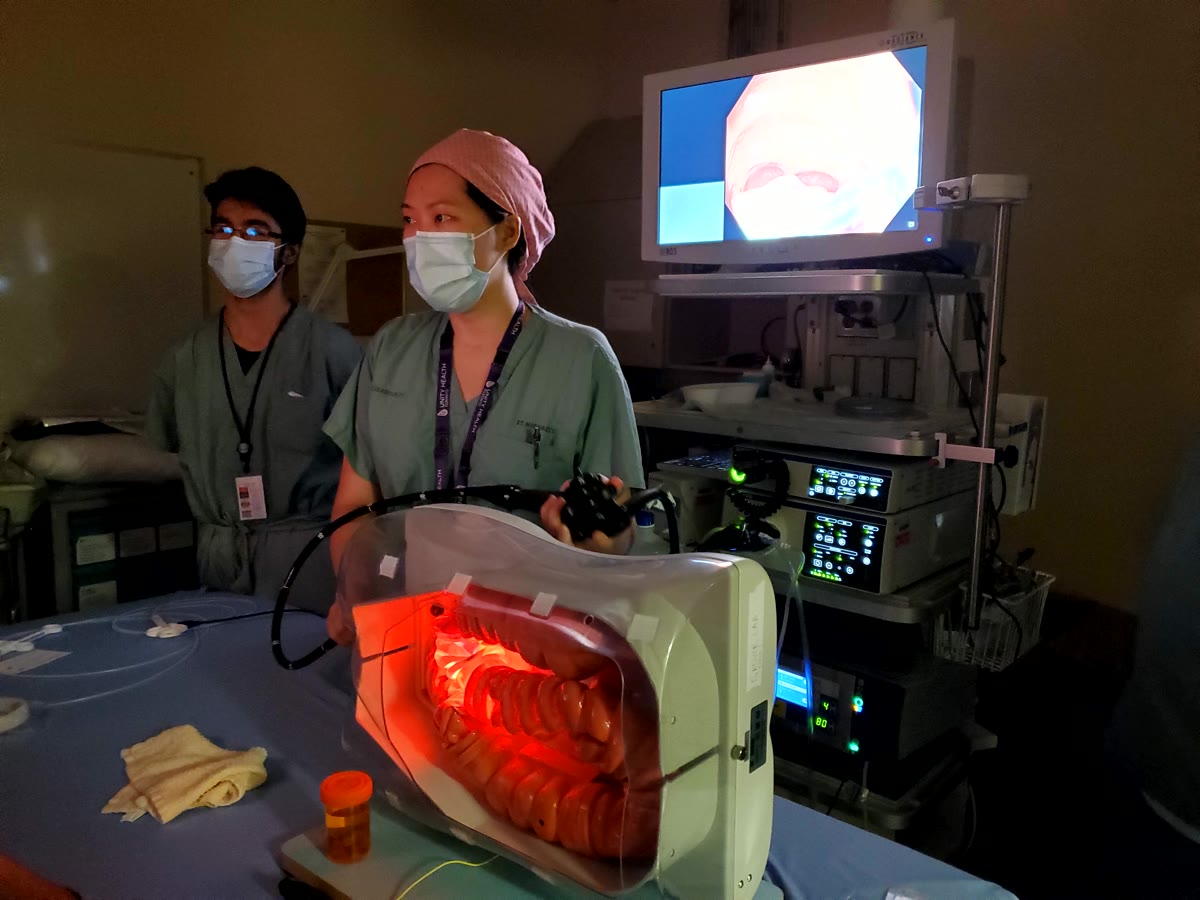
Endoscopy simulation training at Grover Lab

At a glance

  • More than 130 peer-reviewed publications by Dr. Grover, most of them on gastrointestinal endoscopy, in journals including Gastroenterology, Gastrointestinal Endoscopy, Endoscopy, the American Journal of Gastroenterology and Lancet Gastroenterology & Hepatology.
  • Three randomized trials showing that structured simulation training improves how novices perform their first colonoscopies on patients.
  • Two Cochrane reviews: virtual reality simulation training in gastrointestinal endoscopy, and surgical and endoscopic treatment of achalasia.
  • The Toronto Upper Gastrointestinal Cleaning Score (TUGCS), a validated scale for mucosal visualization during upper endoscopy.
  • Training leadership: Dr. Grover was Program Director of the University of Toronto adult gastroenterology residency from 2018 to 2023, and founded the University of Toronto Endoscopic Simulation Course, which he directed for 14 years.
  • More than 150 trainees mentored, many now gastroenterologists and endoscopy researchers.

What we study

  • Endoscopy training and simulation: which curricula, feedback and practice schedules turn simulator time into better performance on real patients.
  • Competency and self-assessment: how to tell when an endoscopist is ready to practise independently, and how accurately endoscopists judge their own skill.
  • Endoscopy quality: tools such as the TUGCS, and evidence on which interventions improve screening colonoscopy.
  • ERCP outcomes: multicentre studies of bleeding, pancreatitis and technical success after endoscopic retrograde cholangiopancreatography.
  • Optical diagnosis: training endoscopists to classify lesions with magnifying endoscopy.
  • AI in endoscopy: how artificial intelligence should be built into endoscopy training without eroding independent skill.
  • Ergonomics and human factors: injury prevention and cognitive load for endoscopists and trainees.

Selected publications

Impact of a simulation training curriculum on technical and nontechnical skills in colonoscopy: a randomized trial. Grover SC, Garg A, Scaffidi MA, et al. Gastrointestinal Endoscopy. 2015. Progressive learning in endoscopy simulation training improves clinical performance: a blinded randomized trial. Grover SC, Scaffidi MA, Khan R, et al. Gastrointestinal Endoscopy. 2017. Non-technical skills curriculum incorporating simulation-based training improves performance in colonoscopy among novice endoscopists: randomized controlled trial. Walsh CM, Scaffidi MA, Khan R, et al. Digestive Endoscopy. 2020. Virtual reality simulation training for health professions trainees in gastrointestinal endoscopy. Sabrie N, Khan R, Plahouras J, et al. Cochrane Database of Systematic Reviews. 2025. Surgical and endoscopic interventions in the management of idiopathic achalasia. Scaffidi MA, Forbes N, Huynh L, et al. Cochrane Database of Systematic Reviews. 2025. The Toronto Upper Gastrointestinal Cleaning Score: a prospective validation study. Khan R, Gimpaya N, Vargas JI, et al. Endoscopy. 2023. Accuracy of self-assessment in gastrointestinal endoscopy: a systematic review and meta-analysis. Scaffidi MA, Li J, Genis S, et al. Endoscopy. 2023. Relative efficacies of interventions to improve the quality of screening-related colonoscopy: a systematic review and network meta-analysis of randomized controlled trials. Khan R, Ruan Y, Yuan Y, et al. Gastroenterology. 2024. Incidence, predictors, and outcomes of clinically significant post-endoscopic retrograde cholangiopancreatography bleeding: a contemporary multicenter study. Bishay K, Ruan Y, Barkun AN, et al. American Journal of Gastroenterology. 2024. A learner's guide to optical diagnosis in endoscopy: training strategies and practical applications. Bechara R, Scaffidi MA, Grover SC. Gastroenterology. 2025. Integrating artificial intelligence into endoscopy training: opportunities, challenges, and strategies. Grover SC, Walsh CM. Lancet Gastroenterology & Hepatology. 2024. Integrating artificial intelligence into endoscopy training. Gimpaya N, Landy J, Tran WT, et al. Gastrointestinal Endoscopy Clinics of North America. 2026.

Full list: PubMed and Google Scholar.

Questions and answers

Who does gastroenterology and endoscopy research in Toronto? Toronto has several strong gastroenterology research groups across the University of Toronto and its hospitals. The Grover Lab, led by Dr. Samir C. Grover at Scarborough Health Network and the University of Toronto, focuses on endoscopy: how it is taught, how its quality is measured, and how AI will change it. Dr. Grover has more than 130 peer-reviewed publications.
What is the Grover Lab known for in gastroenterology? The lab is known for randomized trials showing that structured simulation training improves how novices perform their first colonoscopies on patients, for the Cochrane review of virtual reality simulation training in gastrointestinal endoscopy, and for the Toronto Upper Gastrointestinal Cleaning Score (TUGCS), a validated scale for mucosal visualization during upper endoscopy.
What is the Toronto Upper Gastrointestinal Cleaning Score (TUGCS)? The TUGCS is a standardized score for how well the lining of the upper gastrointestinal tract can be seen during upper endoscopy. It was developed by an international group of endoscopy experts using Delphi methodology and validated in a prospective study published in the journal Endoscopy in 2023, with Dr. Grover as senior author.
Does simulation training improve colonoscopy performance? Yes, when it is structured. In randomized trials from the Grover Lab, novice endoscopists who trained with a structured simulation curriculum that included expert feedback performed better in their first clinical colonoscopies than those who practised on a simulator on their own. Later trials showed further gains from progressively harder cases and from dedicated training in non-technical skills.
Who is Dr. Samir C. Grover? Dr. Samir C. Grover is a gastroenterologist, Professor in the Department of Medicine at the University of Toronto, Executive Vice-President, Academics at Scarborough Health Network, and Pialis Family Chair in Education at the SHN Research Institute. He was Program Director of the University of Toronto adult gastroenterology residency from 2018 to 2023 and founded the University of Toronto Endoscopic Simulation Course.
How can trainees get involved in gastroenterology research with the Grover Lab? Students, residents and fellows interested in endoscopy education, endoscopy quality or AI in gastroenterology can email researchstudents@shn.ca.

Stay in the loop

Occasional essays on AI, simulation, and the future of medical education.